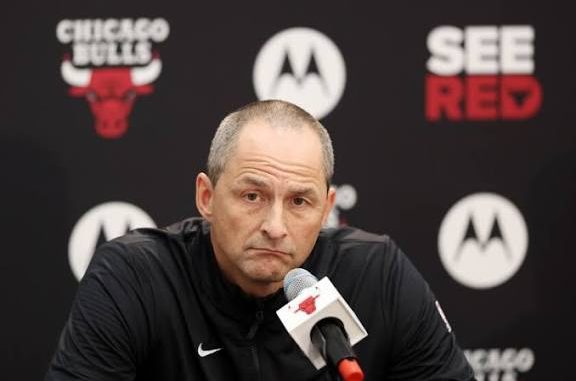
After months of struggle and uncertainty, the Chicago Bulls made it clear at the 2026 NBA trade deadline that they were ready to shift direction rather than stay in the same middling place in the league. Executive Vice President of Basketball Operations Artūras Karnišovas stood before the media to explain a series of roster moves that were among the most dramatic in the franchise’s recent history. Although he repeatedly rejected the term “rebuild,” insisting the team is simply in a different “stage,” the flurry of activity suggested the Bulls recognized that their existing roster wasn’t going to get them where they want to go.
In the days leading up to the deadline, Chicago executed seven trades, significantly reshaping its lineup and future assets. The moves saw veteran contributors and fan favorites depart, including Coby White, Nikola Vučević, Ayo Dosunmu, and Kevin Huerter, among others. In return, the Bulls acquired a group of younger players — such as Jaden Ivey, Anfernee Simons, Rob Dillingham, Collin Sexton, Leonard Miller and Nick Richards — and a large collection of second‑round draft picks.
Karnišovas acknowledged that one of the primary goals behind these transactions was moving away from being “in the middle” of the Eastern Conference standings, a position Chicago has often occupied in recent years without progressing in the playoffs. He made it clear the franchise does not view merely reaching the play‑in tournament as success, and he emphasized his belief that the Bulls must be positioned to compete for a championship down the line.
While front office leaders framed the overhaul as a thoughtful reorientation toward long‑term success, not all observers saw clarity in the plan. Some critics pointed out that Chicago’s haul included no first‑round draft picks, despite Karnišovas previously downplaying the value of second‑rounders only to accumulate a significant number of them this deadline. The emphasis on future draft capital and cap flexibility could signal the Bulls are preparing for more aggressive moves in the offseason rather than immediate contention.
One important part of the conversation after the deadline was how many guards the Bulls now have compared to other positions, particularly big men who can make an impact in the paint. This surplus of perimeter players raises questions about roster balance and whether more changes could be coming before summer.
At the same time, reactions from within the organization suggested a belief that Chicago’s youth and new pieces could grow together and become something stronger over time. The team’s leadership stressed patience — a message that may be difficult for fans who have watched years of underachievement — but they insisted the steps taken were meaningful and would lay groundwork for improvement.
In essence, the Bulls’ approach at the deadline was bold and ambitious, but also uncertain. They dismantled much of last season’s core, brought in fresh faces with potential, and loaded up on future assets. Whether these moves translate into real progress remains to be seen, but what is undeniable is that Chicago is no longer content with its old identity and is openly trying to forge a new one.

Be the first to comment